
AI test automation case study: QA that runs itself.
A US marina-software company shipped releases behind a manual QA cycle that was slow, repetitive, and easy to skip under pressure. Paul Rahme engineered an AI-powered pipeline that reads the product and its changes, generates the tests, runs them on a schedule, and maintains them. Manual QA effort fell by about 80%, and full regression now runs before every release with no dedicated manual cycle. Built at the marina-software client as their AI automation engineer; Aldenebai builds the same systems for other companies.
Release regression at the client before the pipeline
Before every release, a manual regression pass: the same flows clicked through by hand, the same checklists, the same afternoon lost. It was slow enough to delay ships and repetitive enough that, under deadline pressure, parts of it got skipped. Regressions that should have been caught before release were found by customers after it.
How the self-testing pipeline removed about 80% of manual QA effort at the client
A pipeline that treats tests as infrastructure, built on the same framework discipline as the hand-written suites. It reads the product, the requirements, and the code changes, generates end-to-end coverage, and runs it on a schedule in GitHub Actions. When a test fails because the product legitimately changed, the pipeline heals the test rather than waking a person. When a test fails because the product broke, that is a regression, and it is reported before the release goes out. Coverage is maintained by the machine as the product moves. The foundation was years of building end-to-end frameworks by hand; the AI layer removed the hand.
What the QA team does now
Nobody runs a regression cycle. Engineers read a report before each release and act on real failures. QA judgment, what quality means for this product and where users will actually break it, stays with people. The clicking does not.
Results: ~80% less manual QA, no manual regression cycle per release
Rounded from production data at the marina-software client. Definitions: manual QA effort compares the manual QA hours a release needs before and after the pipeline; the dedicated manual regression pass is gone entirely, and the hours that remain are QA work the pipeline is not meant to replace; a release counts as fully regression-tested when the scheduled suite runs green before ship.
Book the Automation Audit
The receipt
Illustration of the system's output, not a production screen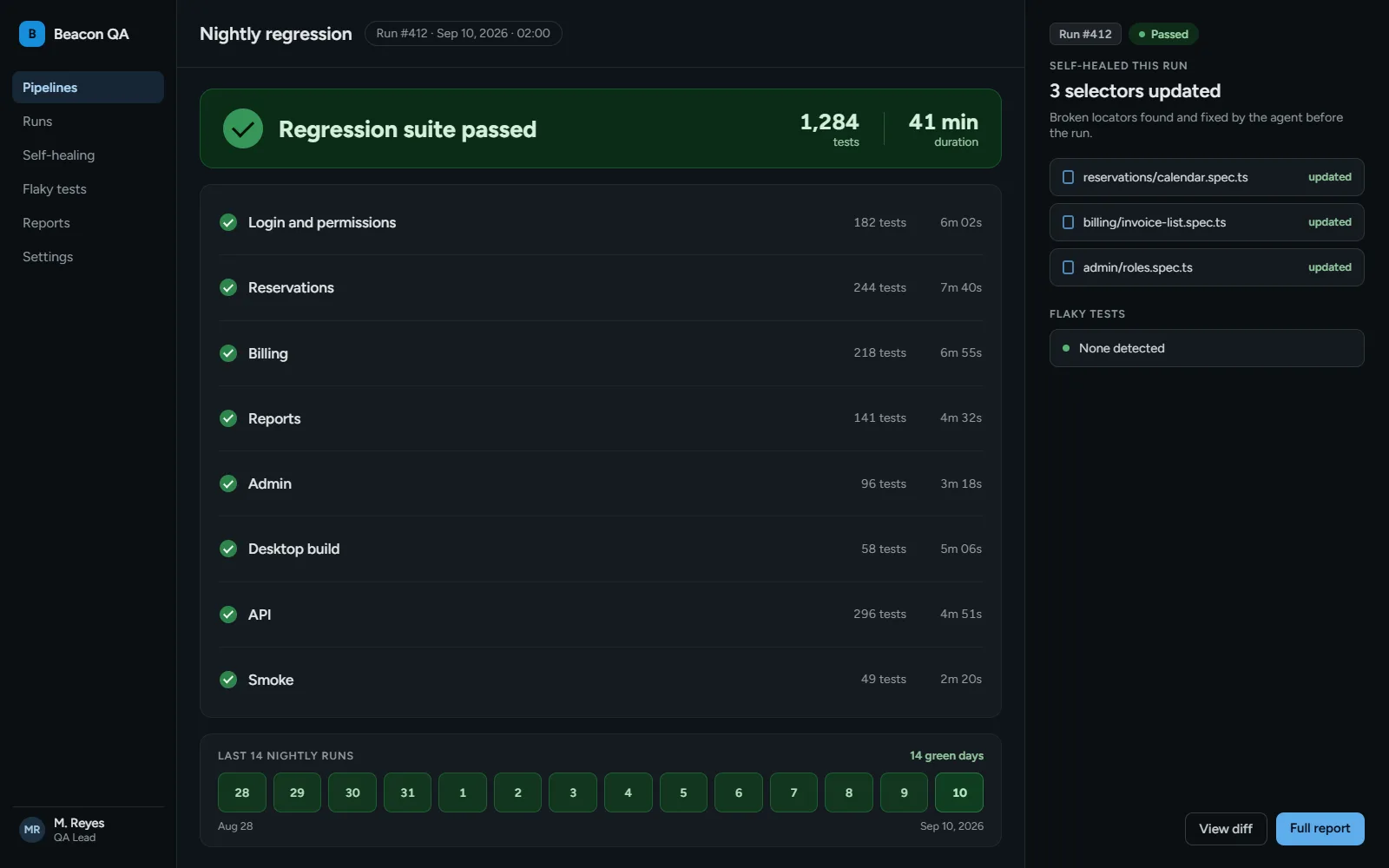
Questions about the self-testing pipeline
How does the pipeline know what to test?
It reads the product and its changes: requirements, code diffs, existing coverage. New or changed behaviour gets new or updated tests. The generated suite runs on a schedule and before releases, and its results are reported like any other CI job.
What does "self-healing" mean here?
When a test fails because the product changed on purpose, a moved button or a renamed field, the pipeline repairs the test instead of flagging a false alarm. When a test fails because the product broke, it is reported as a regression. Telling the two apart is the job.
Did this replace the QA team?
It replaced the manual regression cycle. Judgment about quality, risk, and what users actually do stays with people, who now spend their time there instead of on repeated clicking.
What did the pre-AI version look like?
Hand-built end-to-end frameworks in Cypress, WebdriverIO, TypeScript, and Cucumber, which at Eurisko cut manual regression by about 70%. The AI pipeline is that discipline with the human effort removed from writing and maintaining the tests.
Related pages
Releases held hostage by QA?
The free Automation Audit maps your release cycle and coverage gaps into a concrete pipeline plan. 30 minutes, written Automation Map included.